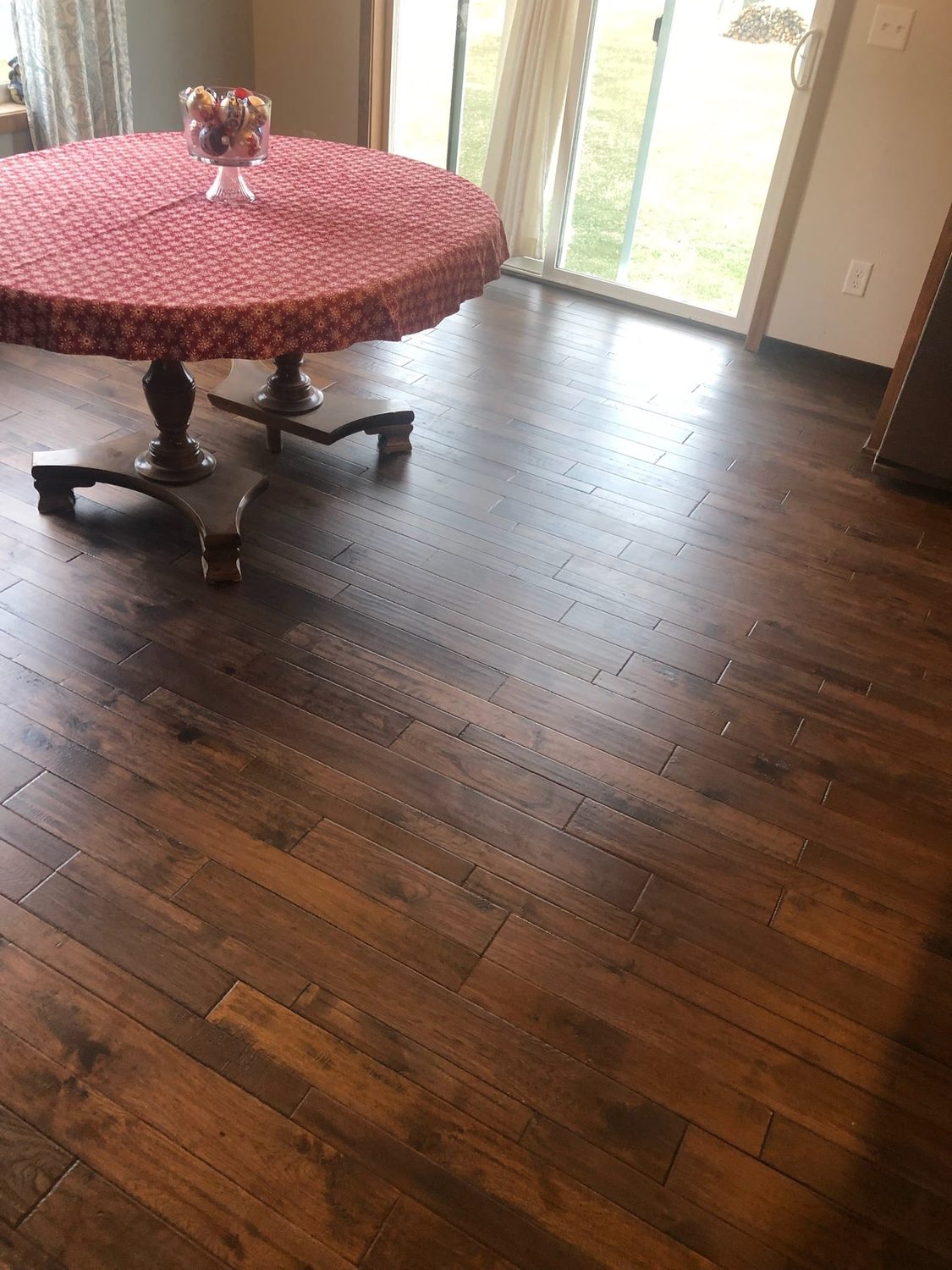
How they’re built
Solid hardwood is one piece of wood, top to bottom — typically 3/4" thick — nailed to a wood subfloor. It can be sanded and refinished for generations. Engineered hardwood is a real-wood veneer bonded to a stable plywood core. It’s genuinely wood on top; the difference is what’s underneath.
Why Minnesota loves engineered
Our winters are desert-dry indoors and our summers are humid — a 40-point swing in relative humidity that makes solid wood expand, contract, and sometimes gap or cup. Engineered’s cross-ply core resists that movement, which is why it can go places solid can’t: over concrete slabs, in walk-out lower levels, and over in-floor heat. Wide planks (7"+) especially favor engineered construction.
When solid still wins
Solid is the heirloom choice: maximum refinish cycles, a lifetime of service, and the right answer when you’re matching existing solid floors in an older home. On upper floors and main levels over a wood subfloor, with humidity control, it’s superb.
Species, width & finish
White oak dominates today — neutral tone, takes any stain, hides wear well. Red oak is the classic Minnesota floor and the value pick; maple is harder with a cleaner grain, and hickory is the toughest of the common species for active households. Current style runs to wider planks (5–9"), matte or wire-brushed finishes that hide micro-scratches, and low-yellowing waterborne topcoats.
Refinish or replace?
If you have original solid floors, refinishing is often the best money in remodeling. When boards are too thin, pet-stained, or you want a different width and tone, replacement wins. Send us photos — we’ll give you a straight recommendation either way.
What it costs
Hardwood is a premium floor: as a broad guide, materials commonly run $5–$12 per square foot and professional installation adds several dollars more depending on subfloor prep and pattern. Our cost guide puts the numbers in context, and firm quotes are always free.