Start with three questions
Before you fall in love with a look, answer these: Will the floor see water? How much traffic and abuse will it take? What’s underneath it? Those three answers eliminate half the options and point you straight at the right category — then the fun part (color, plank width, texture) happens inside a shortlist that can’t go wrong.
Kitchens
The kitchen floor takes dropped pans, spills, dog bowls, and more standing time than any room in the house. Waterproof luxury vinyl plank is today’s default answer — it handles water, feels warmer and softer underfoot than tile, and looks convincingly like wood. Porcelain tile is the most bulletproof choice and pairs beautifully with in-floor heat. Hardwood works in kitchens too if you wipe spills promptly and accept some patina over time.
Bathrooms & laundry
Water wins eventually, so choose floors that don’t care: porcelain or ceramic tile is the gold standard, with rigid-core luxury vinyl a close, budget-friendlier second. Skip laminate and solid hardwood here. If you’re redoing a bath, look at our shower systems at the same time — doing floor and shower together saves a second round of demolition.
Basements
Below grade means moisture, period — even in a “dry” Minnesota basement. Use waterproof floors only: rigid-core LVP, tile, or a waterproof laminate rated for below-grade use. We cover this in depth in our basement flooring guide.
Living & family rooms
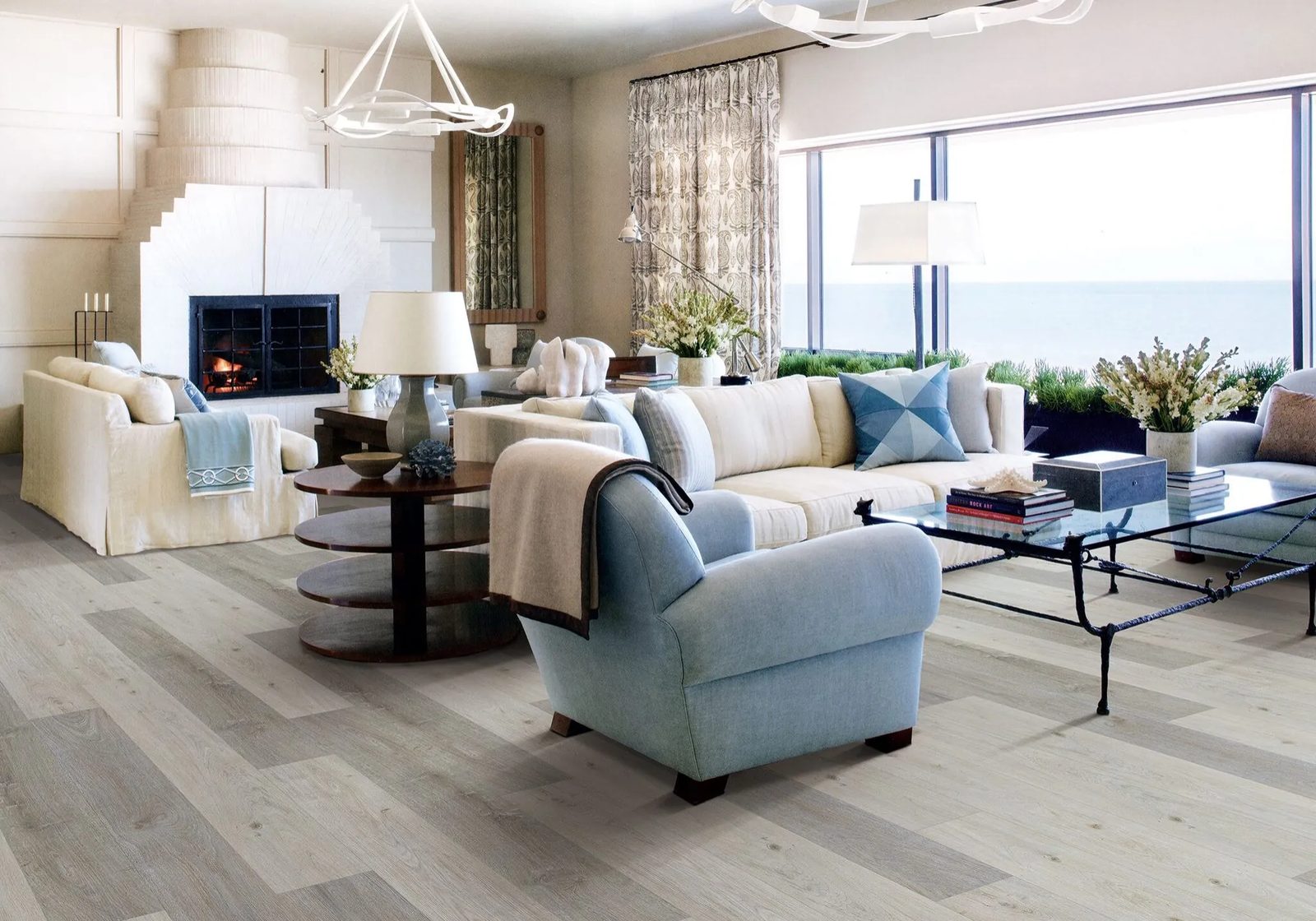
This is where looks lead. Hardwood brings warmth and long-term value; wide-plank engineered oak is the current favorite. LVP earns its place with kids and pets — see our pet flooring guide — and waterproof laminate delivers a remarkably realistic wood look for less.
Bedrooms
Comfort and quiet matter most. Carpet still has a case here, but most of our customers now run the same hard surface from the hallway through the bedrooms for a cleaner look, adding softness back with rugs. Attached-pad LVP and laminate keep footfalls quiet.
Mudrooms & entries
Minnesota’s boots, salt, and grit make this the hardest-working four square meters in the house. Porcelain tile is nearly indestructible; textured LVP is the comfortable alternative. Either way, pick a color that hides sand between sweepings.
Bring your list to the showroom
Measure your rooms (our project calculator makes it quick), note which rooms connect, and bring it in. A designer will lay out options in your budget, send samples home with you, and price the whole project — materials and installation — for free.