The below-grade rule
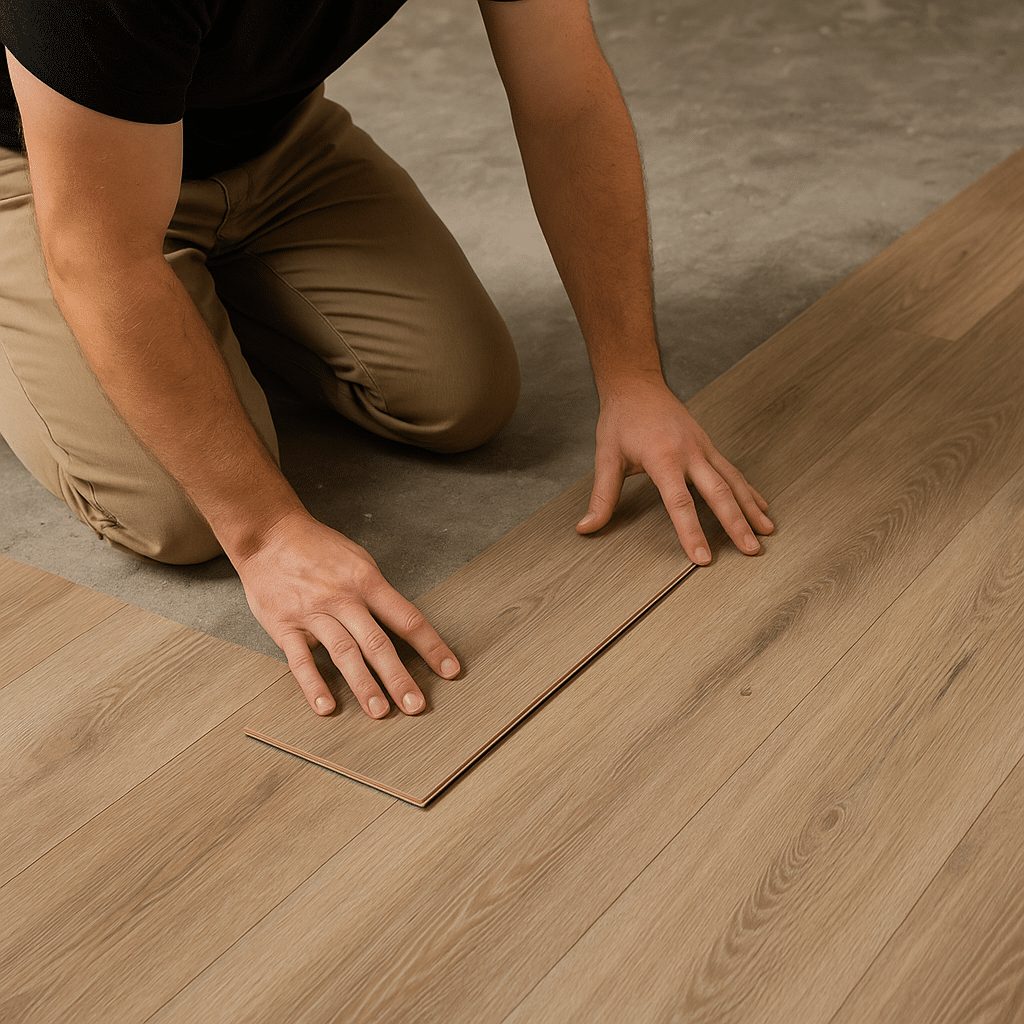
Concrete slabs breathe moisture year-round, even without a drop of visible water. So the rule is simple: everything in a basement must be waterproof or inorganic. That immediately shortlists three winners and rules out solid hardwood and traditional laminate.
The three winners
Rigid-core luxury vinyl is the Minnesota basement default: fully waterproof, warm-ish underfoot, quick to install over flat concrete, and easy to pull and relay if a water heater ever lets go. Porcelain tile is the bulletproof choice and the best partner for in-floor heat. Waterproof laminate rated for below grade brings premium wood looks down the stairs — just verify the rating.
Prep decides everything
Before any floor goes down we want to know two things: is the slab flat (self-leveler fixes dips that would make planks click and flex) and is it dry enough (a simple moisture test tells us). Persistent moisture calls for a vapor-barrier underlayment or a subfloor system — a real fix, not a warranty-voiding gamble.
Warm feet, quiet rooms
Cold floors are the #1 basement complaint, and there are three good answers: attached-pad or cork-backed planks (modest help), a raised subfloor panel system (real help), or electric in-floor heat under tile (the luxury answer, and less costly than most people expect in a bathroom-sized space). Area rugs handle the rest.
Basement bathrooms & laundry
Go fully waterproof — tile or LVP — and consider a tiled curbless shower while the space is open; our shower systems team handles the waterproofing assembly that makes it safe. Floor drains and laundry areas prefer tile’s total indifference to water.
We know these basements
Walk-outs in Maple Grove, mid-century blocks in Crystal, brand-new lower levels in Dayton and Corcoran — after 25+ years in the northwest metro we’ve floored a few thousand of them. Bring your project in, or have us out to measure; estimates are free either way.