Porcelain vs. ceramic
Both are fired clay; the difference is density. Porcelain is fired harder, absorbs almost no water, and works everywhere — floors, showers, outdoors. Ceramic is lighter, easier to cut, and typically less expensive — excellent for walls and backsplashes, and fine on light-traffic floors. When in doubt on a floor, choose porcelain.
Read the ratings, skip the regret
The PEI rating (1–5) tells you where a tile can live: 1–2 for walls only, 3 for typical residential floors, 4–5 for heavy traffic and commercial spaces. For wet rooms, check the slip rating (DCOF) — anything for a shower floor or entry should be rated for wet areas. Every tile in our showroom is labeled, and our staff can decode any spec sheet you bring in.
Sizes and where they shine
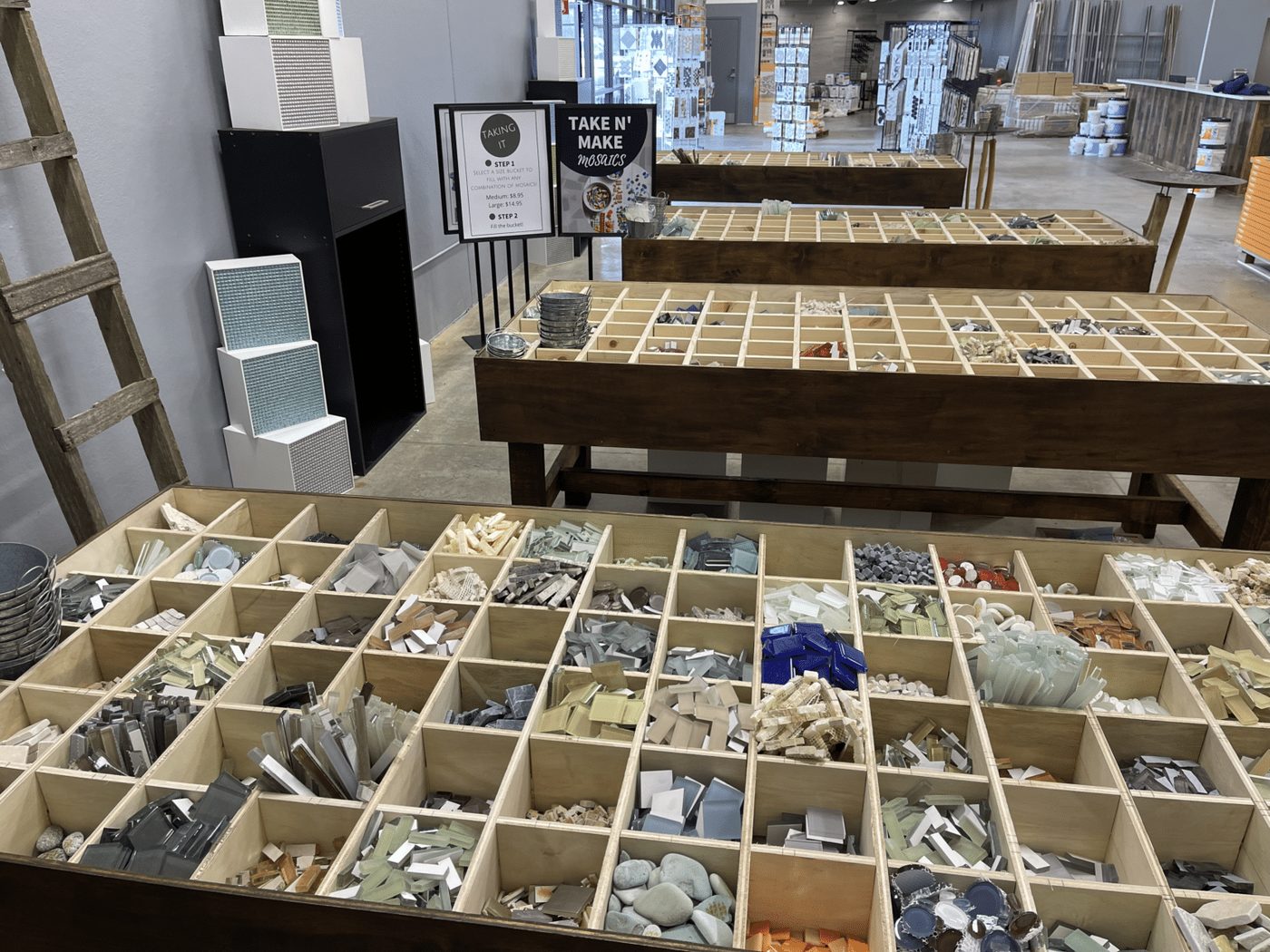
Large-format (12×24" and up) makes rooms feel bigger with fewer grout lines — today’s default for main floors and shower walls. Subway and brick shapes are timeless on backsplashes and shower walls. Mosaics and hex add grip and character on shower floors and vintage baths. Plank tile delivers a wood look that’s literally fireproof and waterproof.
Grout is a design decision
Matching grout makes the surface read as one plane; contrasting grout turns the pattern into the feature. Either way, spend up for quality stain-resistant grout — it’s a small line item that decides how the floor looks in year five. We stock the full setting-material lineup, including Merkrete and Schluter systems, for DIYers and pros alike.
Showers need a system, not just tile
Tile is the visible layer; waterproofing underneath is what keeps a shower healthy. We build complete shower systems — pans, membranes, niches, and glass — so the beautiful part lasts.
Ballpark your quantities
Use the tile calculator to count tiles and add a cutting allowance (10% typical, more for diagonal layouts). Bring your numbers in and we’ll fine-tune the order so you’re not stuck short — or holding three extra boxes.